
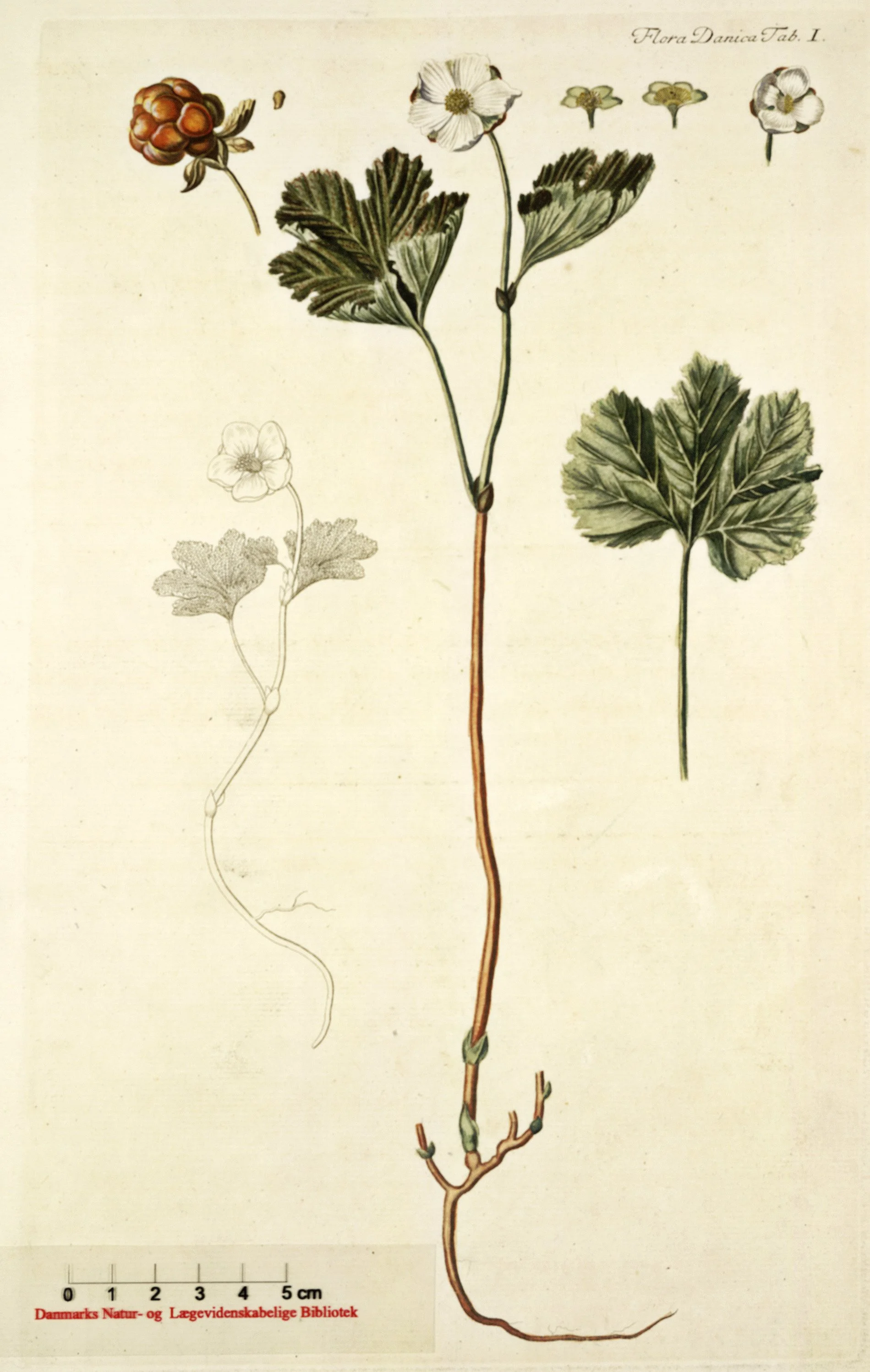
Between 1761 and 1883 the Danish state supported the publication of 3240 tables of indigenous Danish plants through the 51 fascicles of the Flora Danica. The history of the Flora Danica is thus a history of continued botanical efforts and state support, but it is also a history of dramatic changes. In this talk, I focus on one such shift, namely the removal of the first editor, Georg Christian Oeder, following the political downfall of Johann Friedrich Struensee. I argue that Oeder’s practice as Flora Danica editor straddled botanical and political-economic surveying, and that his fall should not be regarded as an exclusively political event. Next, through analysis of the bureaucracy of the distribution of the Flora Danicafascicles, I argue that the continued survival of the Danish national flora depended on its continued mobilisation as an instrument of statecraft by the King and his ministers. In the talk, I use the case of Oeder’s fall and the Flora Danica’s survival to reflect on the discontinuous nature of seemingly consistent projects of knowledge-making.
Christoffer Basse Eriksen is associate professor of history of science at the Centre for Science Studies, Aarhus University. Since earning his PhD in 2018, he worked as a postdoctoral researcher at the University of Cambridge and Humboldt-Universität zu Berlin before returning to Aarhus University in 2024. His research investigates the early uses of the microscope in the Royal Society, the emergence of plant anatomy as a discipline, and the territorial politics of plant images. He is currently leading the research project “Sovereign Flowers,” which sets out to conduct the first large-scale study of the national flora of Denmark, the Flora Danica. Christoffer is also serving as Chairperson of the Young Academy of Denmark.
For the Zoom link, please email instructingnaturalhistory@uu.se